Media Coverage


Tuesday, 14 April 2009

Hiker Attacked on Ontario Trail

Wolfmaan Note: This is scary stuff, especially with my big Bruce Trail hike coming up in just a few weeks...

Another attack on trail
It's too soon to know if there's any connection between a midday stabbing along a Twelve Mile Creek hiking trail Tuesday and a series of muggings nearby last fall, police say. A man was beaten and stabbed shortly after 11:30 a. m. as he walked on the Merritt Trail on the west side of the river near Martindale Road and Violet Street.

Witnesses who found the injured man along the trail said he reported being struck over the head and stabbed a couple of times in the lower body.

Niagara Regional Police said the man was attacked from behind by two men who hit him in the back and neck with a metal object.

He was then punched, kicked and stabbed with a knife, police said.

The victim was robbed of an undisclosed amount of money.

He was taken to St. Catharines General Hospital with non-life-threatening injuries.

Hikers Frank and Ruth Hampson were in the midst of one of their regular trail-cleaning walks when they spotted the wounded man lying at the bottom of a steep embankment.

The couple noticed a wallet and a small satchel on the ground at the edge of the trail and then saw the man in the brush, close to the water's edge.

"I said, 'Are you OK?' And he said, 'No, I'm bleeding. I've
been stabbed'," Frank recounted, as firefighters and paramedics worked on the victim. The injured man called 911 himself with a cellphone, but asked the couple to stay on the trail until help arrived, Frank said.

St. Catharines firefighters and Niagara EMS paramedics used ropes and a basket stretcher to carry the victim up the embankment he had fallen down after the attack. Police scoured the area for suspects with a search dog, but came up cold.

Last fall, cyclists and hikers were targeted by muggers on another section of recreational trail along the same creek a couple of kilometres away.

At the time, police said they believed there were links between the three incidents in September, including one violent robbery and two attempted muggings.

All three involved several young males preying on victims using the trail, near the foot of the Burgoyne Bridge.
In one case, a cyclist managed to escape after being beaten with a baseball bat by three men only to be confronted by three more men a couple hundred metres away, including one armed with an axe.

No arrests were made in the incidents.

But police said more investigation is required to determine if there are any ties to the latest trail assault.
"It's probably something where people will draw conclusions, but it is still really early," NRP spokeswoman Jacquie Forgeron said. "They still have to get (the victim's) statement. There's still so much work
ahead."

The attack left some neighbouring residents unsettled and worried about the safety of using the popular recreational trail.

"I wouldn't (hike) it by myself, ever," Ruth Hampson said.
Violet Street resident Francis Skrzeszewski said it's fairly common for young people to party along the trail at night, but it's also well used by families, cyclists and joggers.

"There's been some wackos down there before, but I've never seen anything like this," he said. Police are appealing for anyone with information about Tuesday's
assault to call 905- 688-4111, ext. 4272 or leave and anonymous tip through Crime Stoppers at 1-800-222-8477.

Sunday, 29 March 2009

Viable way to repair Canadian Economy..

The Business Section Editor of the St. Petersburg Times asked readers
for their ideas on how they would fix the economy. Here's the winner.


Patriotic retirement


There's about 40 million people over 50 in the work force. Pay

them $ 3 million apiece severance with the following stipulations:


1) They leave their jobs. Forty million job openings -

Unemployment fixed.


2) They all buy NEW North American cars. Forty million cars ordered -

Auto Industry fixed.


3) They either buy a house or pay off their mortgage - Housing Crisis fixed


Total amount committed -$120 billion --

Considerably less than the "stimulus package".

Sunday, 18 January 2009

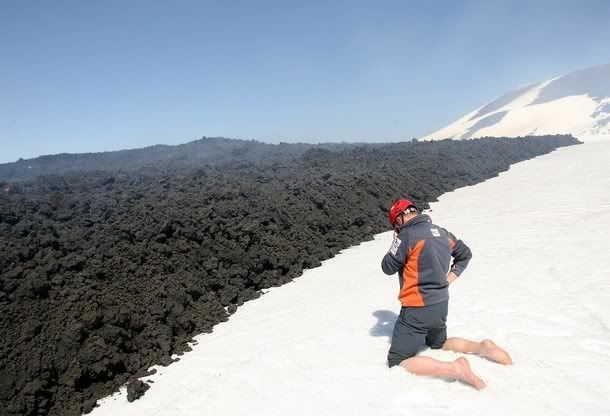
Barefoot climber tackles Mt. Fuji

(ANSA) - Tokyo, September 20 - An Italian mountaineer who has become famous for scaling peaks in his bare feet is to take on Japan's highest and holiest mountain, Mt. Fuji.

Antonio Peretti, 47, a charity-driven forest guard and part-time adventurer from the mountainous Veneto region, is to attempt his feat next month - on the heels of similar exploits that have earned him the nickname "the barefoot climber".


Peretti, who pits himself against nature under the adopted name of 'Tom Perry', is an amateur parachutist, hiker and biker who says he "discovered his true calling" when he flung off his boots and started running headlong down a local mountain one summer's day in 2002.

Over the next five years, Hobbit-like, he clambered over most of his native Dolomites as well as venturing farther afield to Mt. Blanc, Kilimanjaro, the Himalayan heights of Makalu, volcanos in Ecuador, Bolivia and Etna in Sicily - while it was erupting.

On his website, www.tomperry.it, Peretti says he feels "the Earth transfers its energy to me while barefoot.

"I am spiritually reborn, I become a conduit for positive and genuine values".

On each of his climbs Perry has raised money for environmental causes and peace groups worldwide.

This time he will be bringing ash from Etna to the top of Mt. Fuji in a sort of symbolic 'twinning' of the two famous peaks.

Perry will also carry up a plaque commemorating the exploits of Italy's late 'Human Condor' Angelo D'Arrigo, who died in a plane crash last year.

The Mt. Fuji ascent will be covered by Sky TV and journalists who have recorded Peretti's other exploits will put together an 'instant book' on the initiative.

Saturday, 25 October 2008

The Life and Times of Lupis

The Life and Times of Lupis.

January 04 – 1995 to October 24 – 2008


It was a fateful day in summer 2004, I was married to a wonderful lady by the name of Charlene, living on York Street in St. Catharines. I took a trip to the local SPCA, and decided to view the dogs which were available for adoption.

Amongst all the dogs, a young dog, about 6 or 7 months old with a beautiful upturned tail, and wolf-life appearance stood out amongst the crowd. He barked and barked his head off. I decided to take a look at him and requested that he be brought to a private room where both my wife and I could have a closer look. With a glint in his brown eyes, he did not stop barking. The agents there advised us that he will be a "barker" if we decide to take him. Already having one brown shephard mix at home, we decided to adopt him, and call him Lupis as he looked like a wolf.

Lupis was very well behaved, although very loud and barkey. Upon examination by a vet, we were informed he was indeed part Wolf. He spent several years with us in our home on York street until 1997 when Charlene and I split up, and I moved to Niagara-on-the-Lake. Sadly due to some medical complications, Max had to be put down in late 1997.

Lupis enjoyed the farm and spent many hours outside, as well as travelling around with me in my 1986 Jeep CJ-7 camping, hiking, and canoeing in places like Algonquin Park, and Frontenac park.

Once Lupis managed to escape his leather harness when my Jeep was parked outside a store, and got loose in Niagara-on-the-Lake. It was a hot summer day in 1997 and through his exploits managed to burn his feet badly and had to be treated by the vets, wearing socks with ointment for several weeks after the incident.

Being outdoors, even in the cold, harsh winters in Northern Ontario where temperatures routinely reached -40C, was where Lupis was happiest. He had is own backpack fitted just for him as well as special boots called "muttlucks" which kept his feet from freezing and icing. Instead of a collar, Lupis had a "halti" which was similar to a horse halter to protect his neck.

Whether it was in deep winters, or climbing the peaks of Killarney Park Lupis was happiest outside as a trail dog. He spent many, many nights under the stars in his natural environment with me camping in remote wilderness areas in Ontario.

In the year 2000 my wife Tori and I decided to get our transport truck drivers license and start driving long distance for a living. As a love of travel, Lupis was in his prime. He got to do the things he enjoyed the most. Sit in the passenger seat and watch the world go by. He has travelled from east to west, and North to south. Lupis set foot in the Gulf of Mexico, and the deserts of Texas, travelling to almost every state and province in North America. He spent many nights sitting in the front seats of our truck watching the other trucks and dogs at truckstops all around North America.

His last big trip was through Quebec, New Brunswick, and Nova Scotia in summer 2007 where we managed to go and climb some of the mountains in the Bridgetown Nova Scotia area where we own some land.

As time went on, he was plagued by the ravages of time and had several operations for various things, including removal of large lumps, etc. In early 2008 his hips started troubling him and he started to have difficulty walking. He still participated in gentle hikes and lots of canoe trips around Ontario as it was easy, low-impact work.

On Thursday, October 23rd Lupis was going for a hike in WoodEnd conservation area and had difficulty breathing, and started throwing up, and could not walk. We aborted the hike and he had difficulty breathing throughout the night.

On Friday, October 24th, 2008 we took him to the Martindale Animal Clinic at 08:30hrs where they weighed him in and again he vomited on the scale. They rushed him into the back room to find that part of his throat muscles had spasmed and collapsed. He was unable to survive without a breathing tube, and had fluid on his lungs.

The university of Guelph could have performed an operation on him which would have repaired the muscles in his throat, however he would have to have a tracheotomy and be transported from St. Catharines to Guelph unconscious. The doctors at the university felt that with his age, he may not have survived the operation, and it would simply "buy some time" before other complications caused the inevitable. No amount of money or operations could save him at this point.

On Friday, October 24th, 2008 at 13:40est it was with a heavy heart we decided to have the throat tube removed, and Lupis passed from this life peacefully while being held by myself and Tori.

It happened so fast. One day our happy-go-lucky and long-time companion was as healthy as ever, and within 24hrs he had succumbed to his affliction and passed away in our arms.

Lupis was my friend, loyal companion and confidant for almost 15 years. His memories will be treasured and he will be deeply missed by everyone whose life he touched. He will be cremated and his ashes returned in an urn, to stay with us for the years to come.

Monday, 1 September 2008

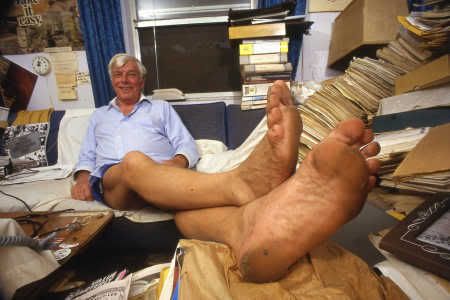
Like his toes, Henry "Barefoot Stew" McDonald’s spirit was free

TAMPA — He had size 11 feet, wide like paddles. Heels sullied and cracked. Toes calloused by pavement and carpet and sand and whatever. Soles thick like, well, shoe leather.

"Oh, he could grind a cigarette out with his feet," said his brother, Duncan McDonald.

Henry "Barefoot Stew" McDonald died Tuesday after a battle with vascular problems. He was 83.

He never had much use for shoes. He had a couple of pairs he wore to funerals and church when his family insisted. Once, a flight attendant infuriated by his dogged insubordination thrust him knitted booties to wear on the plane. They didn't fit.

Shoes didn't make sense. Check your hands, he theorized. Your fingernails aren't trapped up all day. Don't they look healthier than your toes? And furthermore, why should anyone even care?

It came down to freedom.

"Take a look at a baby sometime," he told the St. Petersburg Times in 1988. "You put shoes on a baby, and the first thing the baby does is take them off. It's a natural thing."

He grew up during the Great Depression, a time when many of his friends didn't have shoes. Rather than make them feel bad, he dumped his under a bush before school and let his piggies fly free. His mother never knew.

In the Army Air Corps, he flew bombers sans shoe. Later, he worked as a general's aide. The general insisted Mr. McDonald wear shoes with his uniform. He compromised — he'd wear them through the parking lot and into the office. Once he was through the door, the shoes were a goner.

Eventually, the general stopped wearing shoes, too.

In the 1950s, he raced stock cars on the NASCAR circuit. It's where he earned the nickname "Barefoot Stew," because, well, you know.

"He could hook his foot over the accelerator panel," said his brother, 79. "The last guy that came off the gas into the first turn won the race."

Feet aside, he was not a sloppy dresser — quite the opposite. He dined shoeless at Bern's Steakhouse, the Don Cesar and Studio 54 in New York, sometimes in tuxedos. Once, he deboarded a plane clad in a decadent gray three-piece suit, white button-front shirt, camel hair coat and tie. No shoes.

It was snowing.

He found talents that suited him. Mr. McDonald was one of the first people to ever waterski barefoot.

He was strong and handsome, a towering 6 feet 4. He wowed crowds by lifting tiny female performers in the air at Cypress Gardens, heels skidding along the surface at high speeds.

Waterskiing gave him notoriety. He found work doing sports commentary on ABC's Wide World of Sports. He got bit roles in movies and commercials. He modeled as a Marlboro man and for Vitalis hair tonic.

He taught waterskiing in Tampa and judged national and international barefoot waterski events. In 1992, he was inducted to the Waterski Hall of Fame.

The film industry always interested him. He once served as president of the Florida Motion Picture and Television Association. He scouted locations for major motion pictures like Parent Trap II and H.E.A.L.T.H.

His North Tampa house was cluttered with stacks of newspapers and documents reaching the ceilings. He tiptoed around piles, but he knew where everything was. And, really, he didn't care what anyone thought of it.

He rode motorcycles without shoes, getting tickets and appearing in court several times, always defending his right to naked toes. People who were grossed out needed to loosen up, he figured.

Once, when a woman asked why he didn't wear shoes, he asked her why she didn't wear a bra. It wasn't to be rude — he just wanted to make a point about freedom.

Admirers everywhere looked on, toes cramped and bound by leather and laces.

"A lot of people come up to me and say, 'I hate shoes, too. I wish I could do that,' " he once told the newspaper. "I just tell them they can."


>>BIOGRAPHY

Henry "Barefoot Stew" McDonald
Born: Feb. 20, 1925.
Died: Aug. 26, 2008.
Survivors: brother, Duncan and his wife, Sandra; sister, Kate McDonald Meier and her husband, Robert; brother-in-law, Donald S. Beyer; several nieces and nephews.

Services: none planned.

Tuesday, 1 July 2008

Brain region for adventurousness reported found

"Long before it's in the papers"
July 01, 2008

Brain region for adventurousness reported found

June 25, 2008
Courtesy Wellcome Trust
and World Science staff

Sci­en­tists have iden­ti­fied a brain re­gion that they say en­cour­ages us to seek ad­ven­ture.

Lo­cat­ed in a prim­i­tive part of the brain, it's ac­ti­vat­ed when we choose un­fa­mil­iar op­tions, the re­search­ers said. This sug­gests try­ing out the un­known of­fered ad­van­tages to our ev­o­lu­tion­ary an­ces­tors, they added.

It may al­so ex­plain, they went on, why re-branding of fa­mil­iar prod­ucts en­cour­ages to pick them off the su­per­mar­ket shelves.

Re­search­ers showed vol­un­teers a se­lec­tion of cards, each with an im­age the vol­un­teers had al­ready seen. Each im­age was as­so­ci­at­ed with a spe­cif­ic chance of a re­ward.

Par­ti­ci­pants were al­lowed to choose some im­ages over oth­ers in hopes of the prizes. As the game went on, the play­ers could al­so fig­ure out which choice would pro­vide the high­est re­wards.

But when un­fa­mil­iar im­ages were in­tro­duced, the re­search­ers found vol­un­teers were more likely to take a chance and pick one of these than go on with fa­mil­iar—and ar­guably safer—op­tions.

Bian­ca Witt­mann of Uni­ver­s­ity Col­lege Lon­don and col­leagues used brain scan­ners that mea­s­ure blood flow in the brain to high­light which brain ar­eas were most ac­tive dur­ing the game. They found that when the sub­jects chose a new op­tion, an ar­ea of the brain known as the ven­tral stria­tum lit up.

The prim­i­ti­vity of this brain re­gion sug­gests ad­ven­ture-seek­ing is com­mon to creat­ures rang­ing from hu­mans to sim­pler an­i­mals, Witt­man ar­gued.

"Seek­ing new and un­fa­mil­iar ex­pe­ri­ences is a fun­da­men­tal be­hav­iour­al ten­den­cy," she said. "It makes sense to try new op­tions as they may prove ad­van­ta­geous in the long run. For ex­am­ple, a mon­key who chooses to de­vi­ate from its di­et of ba­na­nas, even if this in­volves mov­ing to an un­fa­mil­iar part of the for­est and eat­ing a new type of food, may find its di­et en­riched."

When we do some­thing that turns out to be ben­e­fi­cial, we're re­warded with a flow of spe­cial neu­ro­trans­mit­ters, or sig­nal­ing chem­i­cals, in the brain that cre­ate a good feel­ing. A key neu­ro­trans­mit­ter as­so­ci­at­ed with re­ward is known as dopamine. The feel­ing of sat­is­fac­tion en­cour­ages us to re­peat the ad­van­ta­geous be­hav­ior.

The ven­tral stria­tum is one of the key ar­eas in­volved in pro­cess­ing such re­wards, Witt­man and col­leagues said. Al­though the re­search­ers couldn't tell from the scans how nov­el­ty seek­ing was be­ing re­warded, Witt­mann said it's probably through do­pa­mine.

Our taste for ad­ven­ture may al­so make us vul­ner­a­ble to ex­ploita­t­ion, Witt­man warned. "I might have my own fa­vour­ite choice of choc­o­late ba­r, but if I see a dif­fer­ent ba­r re­pack­aged, ad­ver­tis­ing its 'new, im­proved fla­vour,' my search for nov­el ex­pe­ri­ences may en­cour­age me to move away from my usu­al choice," said Witt­mann. This "old wine" in a new bot­tle syn­drome, she added, "is some­thing that mar­ket­ing de­part­ments take ad­van­tage of."

Re­ward­ing the brain for nov­el choices could have a grim­mer side ef­fect, ar­gues Na­than­iel Daw, now of New York Uni­ver­s­ity, who al­so worked on the stu­dy. "In hu­mans, in­creased nov­el­ty-seek­ing may play a role in gam­bling and drug ad­dic­tion, both of which are me­di­at­ed by mal­func­tions in do­pa­mine re­lease."

The re­search uti­lized the brain-scan­ning tech­nique known as func­tion­al mag­net­ic res­o­nance im­ag­ing, at the uni­ver­s­ity's Well­come Trust Cen­tre for Neu­ro­im­ag­ing. The find­ings ap­pear in the June 25 is­sue of the re­search jour­nal Neu­ron.

Tuesday, 10 June 2008

Gone For Summer 2008...

Recently I was recruited by an outdoor camp in Ontario Canada which needed an outdoor educator.

From mid-June to early September of 2008 I will be off to teach underprivileged and disabled children white water rafting, canoing, and other fun stuff.

If anyone needs to get in touch with me for an emergency, please get in touch with Brian on my friends list here on MySpace and he will get a message to myself or Wolfsgrrl

Have a great summer everyone, I'll miss you all!


This will be my last blog for quite some time.